ByJohn A
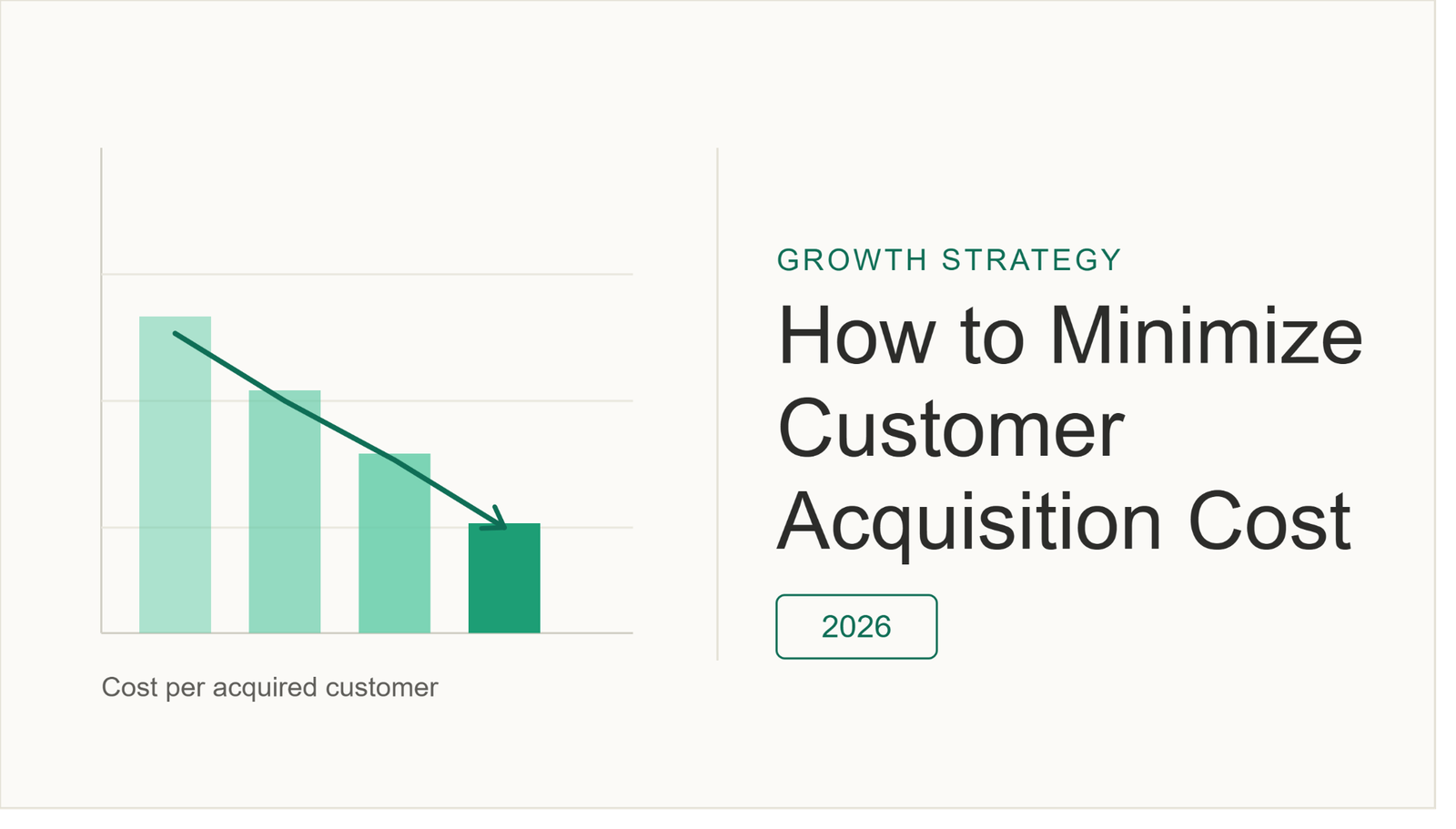
How to Minimize Customer Acquisition Cost (CAC) in 2026
Every business wants more customers. But very few are willing to spend more money to get them.
That is why Customer Acquisition Cost (CAC) has become one of the most important metrics in 2026. Whether you run a startup, an eCommerce store, or a SaaS business, keeping your acquisition costs under control can make the difference between growth and wasted marketing budgets.
The real challenge, however, is that customer behavior has changed significantly, while the cost of paid advertising continues to rise. As competition increases and customers become more selective, businesses need to understand their CAC and find smarter, more efficient ways to acquire and retain customers.
This blog explores six practical strategies to lower Customer Acquisition Cost in 2026 while maintaining growth.
What is Customer Acquisition Cost (CAC)?
Customer Acquisition Cost (CAC) is the amount a business spends to acquire a new customer.
The formula is simple:
CAC = Total Costs ÷ Number of New Customers Acquired
For example, if you spend $10,000 on an online ad campaign in a month and gain 100 new customers, your CAC is $100.
The lower your CAC, the higher your business’s profitability.
6 Smart Ways to Reduce Customer Acquisition Cost
Here are the top six ways to lower Customer Acquisition Cost without sacrificing growth:
1. Focus on Organic Content Instead of Only Paid Ads
The first thing you can do is use organic channels along with paid ones. The reason is that paid online advertising can deliver quick results, but relying on it alone can be expensive.
Instead, invest in content that keeps bringing visitors to your website or landing page long after it is published.
This includes:
- Blog posts
- SEO-optimized landing pages
- Educational videos
- Case studies
- Industry guides
Quality content builds trust before customers even contact your business. It also helps your website rank above your rivals in SERPs, bringing in traffic without paying for anything, completely organic.
2. Improve Your Website’s Conversion Rate
Driving traffic to the landing page is only half the job. If visitors leave your website without taking any action, your CAC increases because you are paying for traffic that doesn’t convert.
Nevertheless, the power to make changes is yours. Small adjustments can lead to effective outcomes.
For example:
- Make your CTA clear
- Reduce page loading time
- Simplify your forms
- Highlight trust signals, such as reviews and certifications
Even increasing your conversion rate from 2% to 3% helps you gain more customers without boosting your marketing budget. That is one of the simplest ways to lower CAC.
3. Use First-Party Data for Better Targeting
Privacy updates and AI-powered search have transformed digital marketing. Businesses can no longer rely on third-party cookies as they did before. Instead, you have to collect people’s data yourself and use it for targeting.
Examples include:
- Email sign-up forms
- Loyalty programs
- Purchase history
- Customer feedback
This helps you craft personalized campaigns that target people more likely to convert.
4. Build an Email Marketing Strategy
Many businesses spend thousands on attracting visitors but fail to stay connected with them. That is where email marketing is an effective option.
Not every visitor is ready to buy today. But if they join your email list, you get multiple opportunities to build trust.
Share:
- Helpful tips
- Product updates
- Success stories
- Exclusive offers
- Educational newsletters
Email marketing usually costs far less than acquiring new traffic repeatedly. Over time, it increases conversions while lowering your overall acquisition cost.
5. Invest in Customer Referrals
Your happy customers can be one of your most powerful marketing channels. People naturally trust recommendations from friends, family, and colleagues far more than traditional advertisements.
A simple referral program can turn that trust into better revenue. Reward your existing users for bringing in new buyers and give them a reason to spread the word.
And the reward doesn’t have to be expensive. Even a small discount, exclusive perk, cashback, or gift can be enough to motivate customers to make a referral.
This overall reduces both marketing effort and acquisition costs. At the same time, it improves customer loyalty.
6. Measure Every Marketing Channel
Not every marketing channel delivers the same results. Some campaigns generate customers at half the cost of others. The only way to know is by tracking performance.
Measure metrics like:
- Cost per click
- Conversion rate
- Customer lifetime value
- Return on ad spend
- Customer acquisition cost by channel
Then shift more budget toward the channels producing the lowest CAC.
Popular Ad Platforms That Can Help Reduce CAC in 2026
By 2026, lowering Customer Acquisition Cost (CAC) shifts focus from selecting the cheapest ad platform to choosing the one that delivers quality traffic. We have listed the most popular options you can use to increase conversions and control CAC in 2026.
1. 7SearchPPC
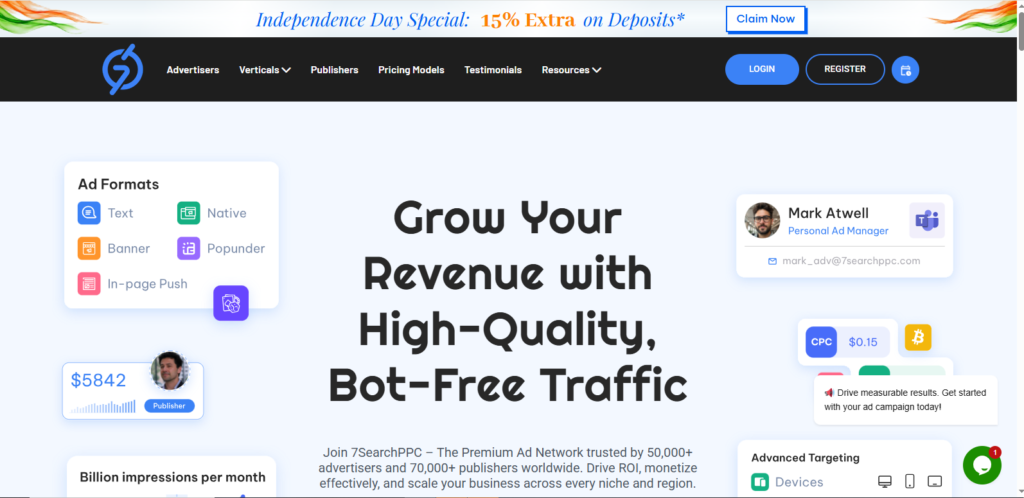
If you’re tired of watching your budget disappear on platforms where every single click costs a small fortune, it’s worth giving 7SearchPPC a look. It’s a self-serve PPC ad network that lets you run both CPC and CPM campaigns across categories like finance, education, dating, and eCommerce.
Here’s what makes it a good fit if you’re watching your CAC closely:
- Quick Approvals: Once approved, your ads usually go live within 24 hours, so you’re not left waiting around.
- Multiple ad formats: Native, banner, popunder, text, interstitial, and push — you can test different ad formats and identify which one is best for your campaign’s success.
- Dayparting: Use the dayparting feature to schedule your ads to run during the hours when your target audience is most active. This helps maximize ad visibility, improve engagement, and increase the likelihood of conversions.
- S2S Tracking: Also supports Server-to-Server (S2S) tracking, enabling you to accurately monitor and measure campaign performance. This provides greater transparency and more reliable conversion data.
2. KADAM
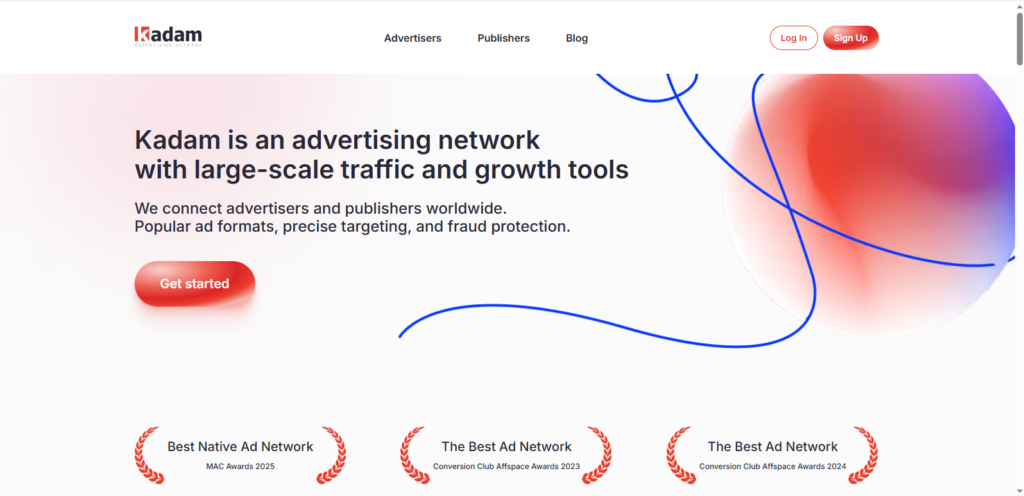
KADAM is a multi-format network (push, native, banner, popunder, video) that’s been around since 2012 and now handles billions of impressions daily across pretty much every GEO you can think of.
The real CAC advantage here is its CPA Target model — you tell it the conversion price range you’re comfortable with, and the system auto-optimizes bids to hit that number instead of you manually tweaking bids all day. Combine that with its anti-fraud tech and targeting, you end up paying for real, qualified traffic rather than noise.
It’s especially popular for testing new geos or Tier 2/3 markets where competition and, therefore, costs are lower.
3. OnClickA
OnClickA heavily relies on popunder and web push ad formats — and that’s a major reason why it effectively keeps CAC low. Unlike typical pop-ups, popunders don’t interrupt users mid-scroll, so engagement remains high without those annoying ads that suddenly appear on your screen while you’re busy scrolling through the website.
A few reasons it’s worth testing out:
- Real-time bidding: You stay in control of your cost per click as campaigns run
- Low starting bids: Bids can start at a fraction of a cent, which makes it easy to test creatives without burning through budget
- Massive reach: Covers 200+ countries, with formats spanning in-page push, video, and native ads
It’s become something of a go-to in performance-heavy verticals, where every dollar saved on acquisition really adds up once you’re running at volume.
4. RevX
RevX takes a different angle from the rest of this list; it’s not about cold acquisition, it’s about squeezing more value out of users you already have. Think of it as a mobile-first retargeting and app-growth platform powered by AI bidding (they call it Intellibid).
Here’s why that matters for CAC: re-engaging an existing user is far cheaper than acquiring a brand-new one. RevX uses behavioral data to bring back users who installed but didn’t convert or went quiet through personalized, dynamic ads across Meta, TikTok, Google, and Snapchat.
If your Customer Acquisition Cost issue is truly a “leaky funnel” problem, this is the platform designed specifically to address that.
5. BIGO Ads
BIGO Ads is the advertising engine behind apps like Likee and imo, and its biggest edge is reach in markets where CPMs are still relatively moderate, think Southeast Asia, South Asia, the Middle East, and Russia.
Why does it help with CAC:
- Over 600 million daily active users to tap into
- Ads sit inside short-video and social feeds, so engagement (and therefore cost-efficiency) tends to run high
For brands expanding into emerging markets without wanting to pay premium Meta or Google rates, BIGO gives you scale at a fraction of the cost.
Final Words!
Cutting your CAC in 2026 isn’t about finding one magic trick — it’s about layering a few smart habits together. Lean into organic content so you’re not paying for every single visitor. Tighten up your website so the traffic you do have converts instead of leaking away. Lean on your own first-party data now that third-party cookies are fading out. Keep in touch with leads via email rather than letting them go cold.
Businesses that treat CAC as an ongoing habit, not a one-time fix, are the ones that keep growing without watching their marketing spend spiral out of control.
Frequently Asked Questions (FAQs)
1. What’s a good CAC for my business?
Honestly, there’s no magic number here — it really depends on your industry, your average order value, and how long customers tend to stick around. A better way to think about it is by weighing your CAC against your Customer Lifetime Value (LTV).
2. How often should I be checking my CAC?
Monthly is a solid baseline for most businesses, but if you’re running active ad campaigns or testing new channels, checking weekly can help you catch problems (or wins) faster. The key is catching trends early enough to actually do something about them.
3. Can I lower CAC without cutting my ad spend?
Yes, and this is honestly one of the most overlooked points. Improving your conversion rate, cleaning up your targeting, or simply getting better at retargeting existing leads can lower your CAC even if your ad budget stays exactly the same. Sometimes the fix isn’t spending less — it’s spending smarter.
4. Is organic content really worth it if it takes longer to show results?
Yes, it’s a slower burn — but that’s actually the whole point. Once a blog post or landing page starts ranking, it keeps pulling in traffic for months, sometimes years, without you spending another dollar on it. Compare that to paid ads, which stop delivering the moment you stop paying. Organic content just keeps compounding.
5. Do referral programs actually move the needle on CAC?
They do, and often more than people expect. Referred customers tend to convert faster and trust your brand from the start, which means less nurturing and lower marketing spend per sale. Even a modest reward — store credit, a discount, a free upgrade — can be enough to get existing customers actively recommending you.